Why Managed Security Services Are the Future of Cyber Defense

The Future of Cyber Defense: Key Takeaways
- Managed security services deliver continuous 24/7 monitoring and rapid threat detection, giving organizations visibility and protection beyond what most in-house teams can achieve alone.
- Partnering with a managed security services provider reduces cost, increases efficiency, and closes internal cybersecurity skill gaps, helping businesses overcome resource limitations and talent shortages.
- As cyber threats evolve and compliance requirements intensify, managed cyber security services offer scalable defense, governance, and response capabilities, making them essential for the future of cyber defense.
Cyberattacks in the United States reached over 2,200 incidents per day in 2023, according to the FBI Internet Crime Complaint Center’s IC3 Report.
This staggering volume shows how rapidly attackers have accelerated their tactics and why many organizations can no longer rely on limited in-house security teams to stay protected.
As the threat landscape intensifies, ISSGLOBAL is helping businesses strengthen their defenses through expert-led managed security services that deliver continuous monitoring, faster detection, and scalable support.
This article will help you:
- Understand why managed security services now outperform traditional in-house security models
- Learn how MSS improves detection, response, visibility, cost efficiency, and compliance readiness
- See why organizations are increasingly turning to outsourced providers like ISSGLOBAL for modern cyber defense.
The Limitations of Traditional In-House Security Teams
In-house cybersecurity teams play an important role in daily operations, but they face significant barriers that limit their ability to deliver proactive, scalable defense.
Skill Gaps Across Specialized Functions
Modern security environments require deep expertise in SIEM tuning, threat intelligence, identity governance, cloud security, endpoint protection, and incident response.
Most in-house teams lack specialists in every domain, creating skill gaps that lead to slower response and higher risk exposure.
Rising Alert Volume and Tool Fatigue
Organizations deploy multiple tools for endpoint detection, email security, cloud monitoring, identity protection, and more.
This creates overwhelming alert noise that internal teams often struggle to triage. As a result, real threats may blend in with false positives.
Limited Coverage Outside Business Hours
Most internal teams cannot provide true 24/7 coverage. Nights, weekends, and holidays introduce visibility gaps that attackers can exploit.
This significantly increases mean time to detect (MTTD) and mean time to respond (MTTR).
Budget Constraints
Hiring cybersecurity specialists is expensive.
Recruiting detection engineers, analysts, and incident responders requires significant investment, and many organizations lack the budget to staff full teams.
These limitations create a strong case for partnering with a managed security services provider that can deliver comprehensive coverage, specialized expertise, and continuous monitoring.
Why 24/7 Monitoring Has Become Essential for Today’s Threat Landscape
Cyberattacks are more aggressive than ever. Threat actors automate reconnaissance, exploit vulnerabilities within hours, and leverage advanced techniques to breach organizations at scale.
Without constant visibility, organizations risk missing small anomalies that can quickly escalate into full incidents.
Attackers Move Faster
Automated attacks, credential stuffing, AI-driven phishing, and exploit kits allow attackers to operate around the clock.
A single missed alert can lead to major compromise.
Cloud and Identity Attacks Require Real-Time Visibility
Today’s attacks frequently target identity platforms, API connections, misconfigured cloud controls, and third-party integrations.
These threats require specialized monitoring and faster detection.
Compliance Requires Continuous Surveillance
Regulations such as SOC 2, ISO 27001, HIPAA, and PCI DSS expect organizations to maintain robust monitoring and documented incident response capabilities.
Without 24/7 visibility, compliance gaps widen.
Advanced Threat Intelligence
Managed security providers incorporate global threat intelligence feeds into their monitoring programs.
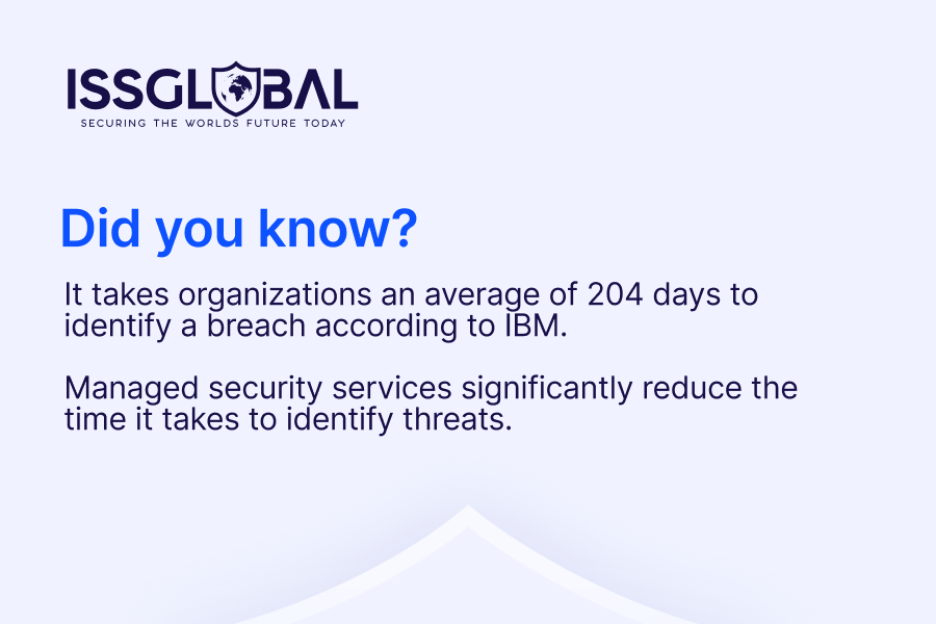
According to the IBM X-Force Threat Intelligence Index, attackers now automate early-stage reconnaissance, reducing time to compromise. In-house teams rarely have the capacity to leverage this kind of intelligence.
Continuous monitoring is no longer optional. It is the foundation of modern cyber defense.
How Managed Security Services Improve Detection and Response Times
One of the greatest advantages of managed cyber security services is the measurable improvement in detection and response speed.
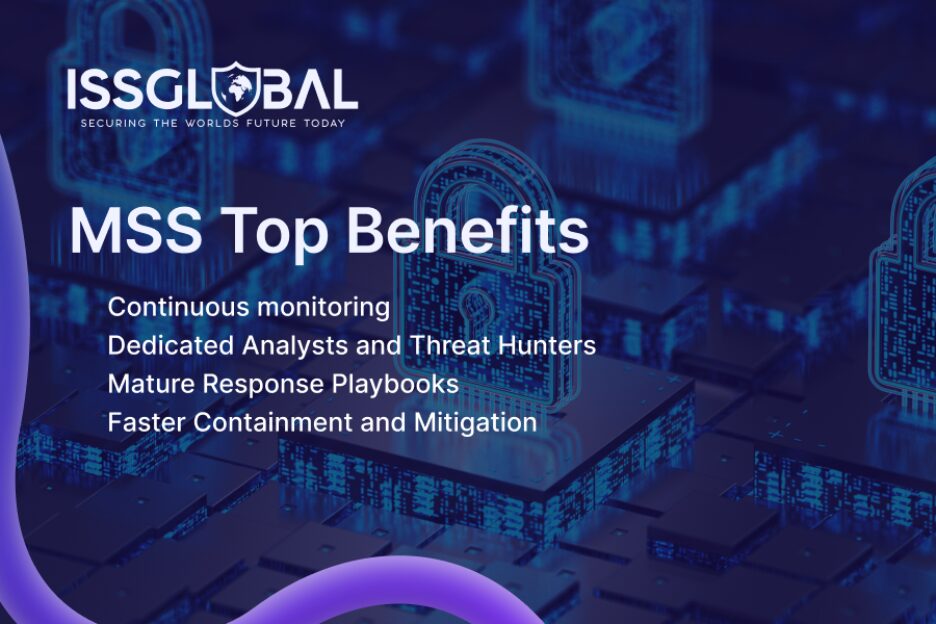
Continuous Monitoring
MSS providers operate 24 hours a day, delivering real-time visibility and reducing blind spots. Faster detection prevents attackers from moving laterally and escalating access.
Dedicated Analysts and Threat Hunters
Providers employ SOC analysts, detection engineers, malware specialists, and incident responders who are trained to identify and analyze sophisticated threats.
Standardized and Mature Response Playbooks
MSS teams use tested playbooks to guide investigation and response, ensuring consistency and speed under pressure.
Faster Containment and Mitigation
By integrating with SIEM, EDR, and cloud security technologies, MSS teams can isolate systems, disable accounts, and contain threats with minimal delay.
Unified Reporting and Centralized Dashboards
Organizations gain access to dashboards that visualize alerts, vulnerabilities, and compliance gaps. This allows internal teams to focus on strategic planning instead of reactive firefighting.
With MSS support, organizations reduce risk, improve readiness, and gain peace of mind through consistent protection.
The Cost and Efficiency Advantages of Outsourced Cyber Defense
Security outsourcing provides significant financial and operational benefits.
Lower Staffing Costs
Hiring cybersecurity professionals is expensive and competitive. Outsourcing provides immediate access to experienced talent without the overhead of full-time salaries.
Predictable Monthly Costs
Most MSS models offer fixed monthly or annual pricing, making budgeting and forecasting more accurate.
Scalable Support
As organizations grow, MSS providers can increase coverage without requiring internal restructuring.
Reduced Tooling Expenses
Some providers bundle SIEM or EDR tools into their service, reducing the need for separate licensing fees.
Improved Operational Efficiency
By offloading monitoring and response, in-house teams can focus on governance, strategy, and long-term initiatives.
Organizations that outsource portions of their security program often achieve stronger protection for less cost and greater consistency.
The Role of MSS in Compliance, Governance, and Risk Reduction
Cybersecurity and compliance are now deeply interconnected. MSS providers support both through structured governance and continuous monitoring.
Continuous Log Management
MSS teams assist with log collection, aggregation, and retention, essential for SOC 2, ISO 27001, HIPAA, and PCI DSS.
Control Mapping and Documentation
Providers support policy development, evidence collection, and internal control reviews.
Incident Response Documentation
MSS teams provide audit-ready incident summaries and response logs that support certification cycles.
Vulnerability Management
Providers deliver continuous scanning and prioritized remediation recommendations.
Alignment With Global Security Standards
Many MSS programs align with leading frameworks such as the NIST Cybersecurity Framework, helping organizations meet regulatory expectations.
This governance support strengthens organizational resilience while reducing long-term risk.
Why MSS Providers Will Lead the Future of Cyber Defense
Managed security services are positioned to become even more essential as threats evolve.
AI-Enhanced Detection
Leading MSS providers leverage AI-driven analytics to spot anomalies and accelerate risk identification.
Multi-Cloud and Hybrid Infrastructure Expertise
Organizations increasingly rely on complex cloud architectures. MSS providers build deep expertise in AWS, Azure, and Google Cloud environments.
Integrated Governance and Response
Providers unify monitoring, detection, response, reporting, and compliance into streamlined programs.
Strategic Advisory Support
Beyond operations, MSS teams help organizations plan for long-term maturity and regulatory changes.
Proactive Threat Intelligence
Global intelligence data helps organizations get ahead of emerging risks before they spread.
As cyber risk becomes more dynamic, the MSS model will continue to lead the future of enterprise cyber defense.
Managed Security Services: Frequently Asked Questions
1. What are managed security services?
Managed security services are outsourced cybersecurity functions provided by a specialist team that handles monitoring, detection, response, vulnerability management, and governance support.
2. Do managed security services replace internal IT teams?
No. MSS providers extend internal teams by taking on continuous monitoring and response so staff can focus on strategic priorities.
3. Are managed security services cost-effective?
Yes. MSS reduces overhead by eliminating the need to hire, train, and retain full-time cybersecurity staff while delivering higher maturity and continuous coverage.
4. What industries benefit from MSS?
Healthcare, finance, retail, manufacturing, SaaS, and critical infrastructure all benefit from outsourced monitoring and compliance support.
5. Can MSS help with compliance?
Yes. MSS teams support framework alignment, evidence collection, log retention, incident documentation, and control validation.