The Role of 7-Layer Staffing

7-Layer Staffing: Key Takeaways
- 7-Layer Staffing is a structured model that organizes cybersecurity responsibilities into seven specialized layers, ensuring clear roles across leadership, architecture, engineering, operations, support, and governance.
- This layered approach helps organizations overcome common challenges such as skill fragmentation, alert fatigue, compliance complexity, limited budgets, and ongoing cybersecurity talent shortages.
- By aligning the right expertise at every layer, 7-Layer Staffing improves speed, coverage, and resilience, giving organizations stronger incident response, better compliance readiness, and a more predictable, scalable security program.
Modern cybersecurity teams face widening skill gaps, rising regulatory demands, and increasingly complex attack surfaces.
Only 27 percent of organizations consider their security teams fully staffed, highlighting the need for structured, multi-layered support.
The role of 7-Layer Staffing in modern cybersecurity operations is to give organizations complete coverage across strategy, architecture, engineering, security operations, support, and compliance.
In this article, we will explain how 7-Layer Staffing works, why it is essential to resilient security programs, the skills required at each layer, and how ISSGLOBAL helps organizations build high performance security teams.
What Is 7-Layer Staffing? A Clear Breakdown of Each Layer
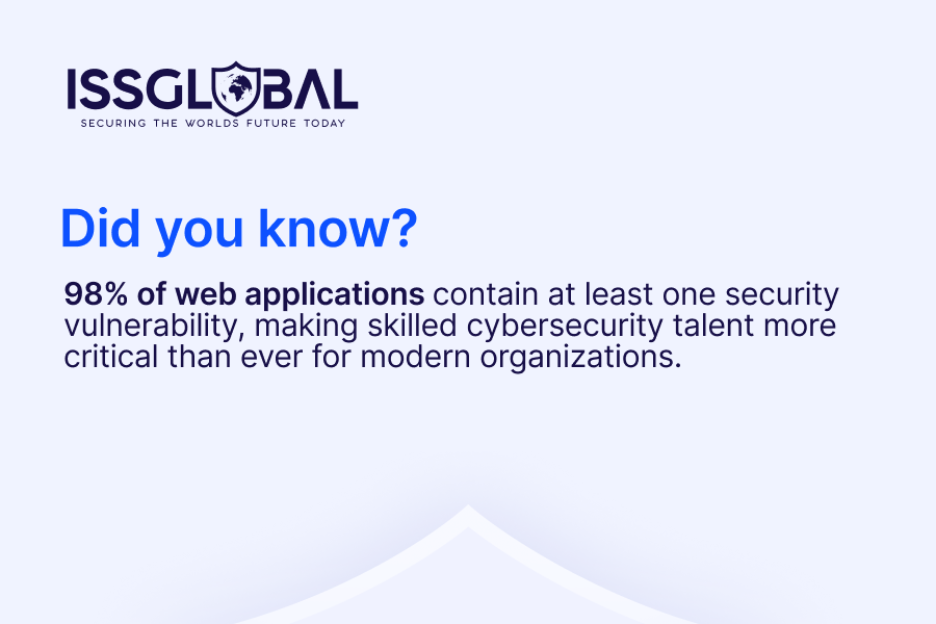
7-Layer Staffing organizes cybersecurity responsibilities into seven distinct, interconnected layers, each with a specific purpose and skill set.
The following breakdown explains the function of each layer, the roles involved, and how they work together to create a complete, resilient security program.
1. Strategic Leadership
Roles: vCISO, advisory leads
Responsibilities: Roadmap development, regulatory alignment, stakeholder communication, governance
These leaders translate risk into business outcomes and ensure alignment with long-term goals.
2. Program and Project Management
Roles: Cybersecurity PMs
Responsibilities: Initiative planning, cross-team coordination, audit cycles, vendor oversight
Program managers ensure cybersecurity projects stay on schedule and meet compliance expectations.
3. Enterprise Architecture
Roles: Cloud architects, network architects
Responsibilities: Secure system design, tool integrations, architectural governance
Their designs create a resilient foundation that supports engineering and operations.
4. Security Engineering
Roles: IAM engineers, cloud engineers, endpoint engineers
Responsibilities: Tool configuration, automation, hardening, vulnerability remediation
Engineers operationalize protections that reduce exposure and strengthen posture.
5. Security Operations
Roles: SOC analysts, incident responders, threat hunters
Responsibilities: Monitoring, analysis, alert triage, threat response
This layer provides the speed and precision required to reduce risk and control incidents.
6. Technical Support and Help Desk
Roles: IT support, service desk
Responsibilities: Ticket resolution, identity access, troubleshooting
Support teams reduce noise and allow cybersecurity specialists to focus on strategic work.
7. Quality Assurance and Governance
Roles: Compliance analysts, risk specialists
Responsibilities: Documentation, policy lifecycle, evidence management, audit readiness
This layer protects organizations from regulatory penalties and ensures accountability.
Why Cybersecurity Teams Struggle Without Layered Expertise
Many organizations operate with unclear roles or consolidated responsibilities that overwhelm staff and reduce performance.
A 2024 global workforce report shows that 71% of organizations lack mature security staffing across all layers, illustrating the need for structured cybersecurity roles. Key challenges include:
Fragmented Skill Sets
One person cannot serve as architect, compliance manager, SOC lead, and engineer, yet many organizations still rely on single-resource coverage for highly specialized demands.
This often leads to skill mismatches that increase risk, slow response time, and hinder overall program maturity. A structured 7-Layer Staffing approach distributes responsibilities appropriately, improving both quality and efficiency.
Compliance Complexity
Directors of IT Compliance struggle with rapidly changing frameworks, ineffective GRC tools, and limited manpower, placing organizations at risk of audit failure or non-compliance penalties.
These leaders must manage evidence, documentation, internal controls, and readiness cycles without adequate support.
With dedicated compliance specialists embedded in layered staffing, organizations strengthen accuracy and ensure regulatory alignment across SOC 2, ISO 27001, HIPAA, PCI DSS, and similar frameworks.
Alert Fatigue
CISOs and analysts face growing alert noise and need structured roles to filter and prioritize threats effectively, especially as environments expand across cloud and hybrid infrastructures.
Without clear staffing layers, alerts go untriaged, and critical incidents can be missed. Effective multi-layered staffing ensures that the right analysts handle detection while engineers and responders execute targeted remediation.
Limited Budgets
Layered staffing assigns the right role for the right responsibility, reducing unnecessary hiring costs and preventing organizations from overspending on full-time positions that provide only partial value.
Leaders often turn to virtual ISCO services or virtual ISCO support to gain high-level expertise without incurring executive-level overhead. This strategic distribution of resources improves ROI while maintaining strong security governance.
Continued Talent Shortages
The cybersecurity workforce gap continues to widen, making it difficult for organizations to recruit and retain specialized talent in engineering, cloud security, incident response, and compliance.
7-Layer Staffing fills those gaps with skilled specialists who integrate seamlessly into existing teams and deliver consistent, high-quality support. This approach helps organizations maintain resilience even during high turnover or hiring freezes.
How 7-Layer Staffing Improves Speed, Coverage, and Security
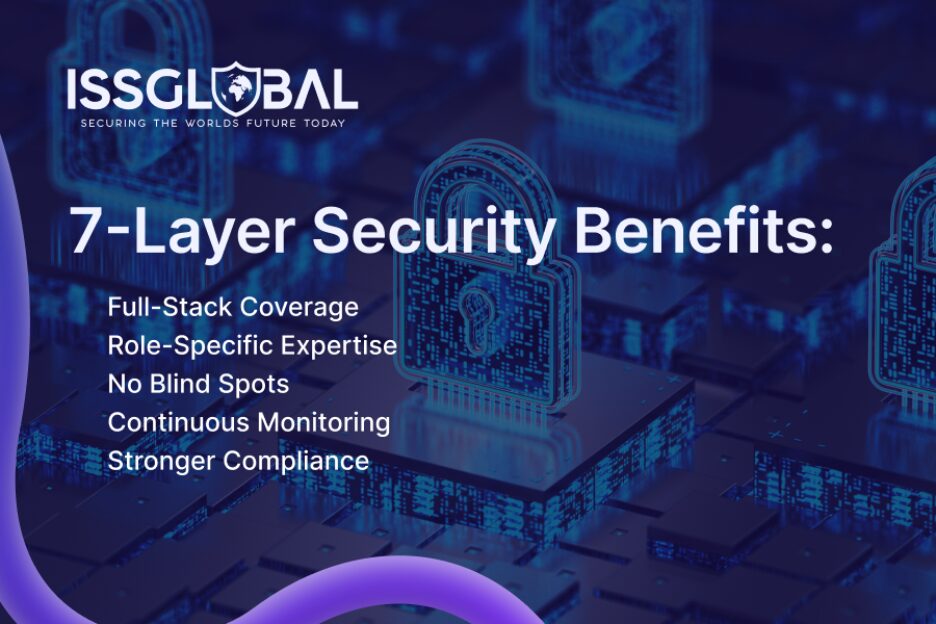
7-Layer Staffing improves cybersecurity effectiveness by enhancing the speed, structure, and consistency of operations. The following capabilities demonstrate how each layer contributes to faster response, broader coverage, and a more resilient security posture.
Faster Incident Response
Clear roles reduce confusion during incidents. SOC analysts handle triage while engineers implement containment and leadership guides strategy.
Complete Lifecycle Coverage
Every phase of cybersecurity, from initial design to ongoing monitoring and audit readiness, receives dedicated attention.
Better Compliance Alignment
Governance specialists manage documentation, evidence, and policy updates, ensuring preparedness for audits such as SOC 2, ISO 27001, HIPAA, and PCI DSS.
Reduced Internal Stress
Engineers focus on engineering. Analysts focus on analysis. Compliance teams focus on governance. Staff no longer juggle unrelated responsibilities.
Higher ROI
By assigning only necessary roles, organizations gain enterprise-grade capability without enterprise-grade payroll.
The Key Skills and Roles Required at Each Layer
NIST guidance reinforces the value of multi-layered security structures, helping organizations establish stronger governance, faster response capabilities, and more resilient operations Security leaders often request guidance on which roles are essential at each layer. Successful teams typically include:
- CISO leadership
- Program and project managers
- Enterprise and cloud architects
- Security engineers
- SOC analysts and responders
- IT support technicians
- Compliance and governance professionals
This layered structure ensures clarity and accountability across all security domains.
When Organizations Should Consider a 7-Layer Staffing Model
A 7-layer model is recommended when organizations experience:
- Rapid cloud expansion
- High alert volumes
- Tool sprawl
- Audit deadlines
- Mergers or acquisitions
- Growth requiring new controls
- Lack of internal bandwidth
- Board pressure for improved governance
- Upcoming certification or recertification cycles
The model also supports organizations adopting ISCO, virtual ISCO, or virtual ISCO services to scale faster and more cost efficiently.
How ISSGLOBAL Helps Build High-Performance 7-Layer Security Teams
ISSGLOBAL approaches cybersecurity with clear communication, strategic guidance, and investigative expertise. Our brand is built on simplifying complexity while delivering results with precision.
Strategy-Led Guidance
We help organizations refine their compliance posture and manage cyber risks with clarity.
Clear, Direct Communication
Our team breaks down complex issues into accessible, meaningful guidance.
Full-Scope Expertise
We deliver talent across all seven layers, including:
• CISO and leadership roles
• Enterprise architecture
• Security engineering
• SOC operations
• Program management
• Incident response
• Compliance and governance
Vendor-Agnostic Recommendations
Our solutions serve the client, not the vendor.
Adaptive, Future-Ready Support
Threats and regulations evolve. We help organizations evolve with them.
7- Layer Staffing: Frequently Asked Questions
1. What is 7-Layer Staffing in cybersecurity?
It is a structured staffing model that organizes cybersecurity responsibilities into seven aligned layers, ensuring complete coverage across leadership, design, engineering, operations, support, and compliance.
2. Why is 7-Layer Staffing more effective than a traditional security team structure?
It prevents skill overload, improves role clarity, and distributes responsibilities logically, improving efficiency and resilience.
3. Who benefits most from 7-Layer Staffing?
Organizations facing rapid growth, cloud adoption, audit requirements, limited budgets, or bandwidth constraints benefit significantly from this model.
4. What compliance challenges does 7-Layer Staffing help solve?
It supports SOC 2, ISO 27001, HIPAA, PCI DSS, and other frameworks through strong documentation, evidence collection, and governance oversight.
5. How does ISSGLOBAL’s approach differ from typical staffing firms?
ISSGLOBAL provides 20 years of cybersecurity and recruiting experience, advisory-first expertise, vendor-agnostic guidance, and specialists across all seven layers, creating unified, high-performance security operations.